







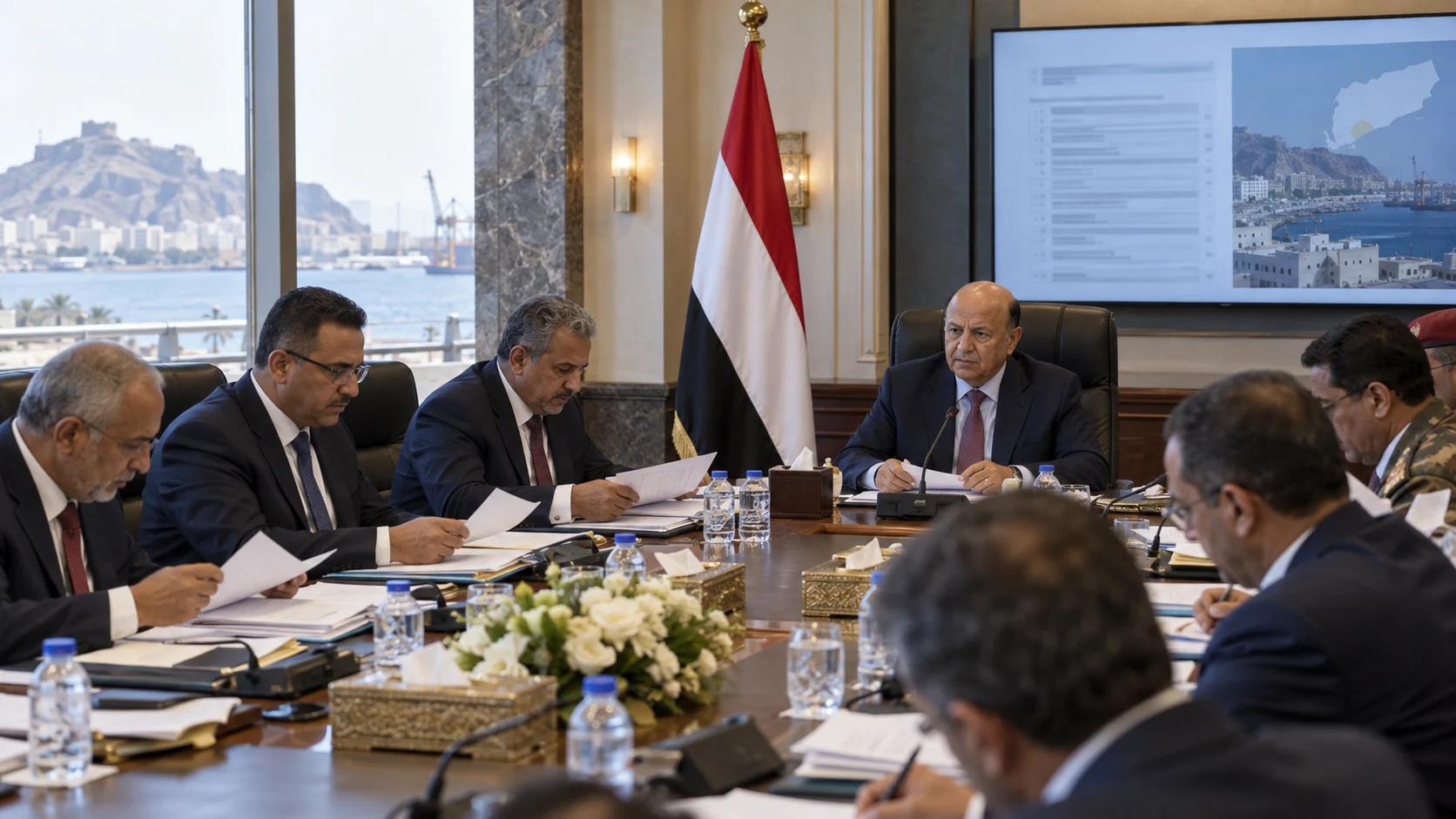

Yemen Houthi terrorist designation moved a step closer after the country’s cabinet approved a draft law that would formally classify the Houthi group as a terrorist organization and criminalize its activities and financing.
The decision was taken at a cabinet meeting in Aden chaired by Prime Minister Shaya Mohsen Zindani. The government directed officials to complete the constitutional and legal procedures required before the draft can be fully ratified and take effect.
The move comes amid renewed fighting, attacks on airports and wider efforts by Yemen’s internationally recognized government to increase financial, legal and diplomatic pressure on the Houthis.
Yemen Houthi Terrorist Designation Moves to Legal Procedures
The Yemen Houthi terrorist designation is not yet a fully enacted law.
The cabinet has approved the draft, but further constitutional and legal procedures are still required for ratification. That distinction is important because the current decision represents a major policy step without yet completing the entire legislative process.
According to Yemen’s official Saba news agency, the draft would designate the Houthi group as a terrorist organization while criminalizing its activities and funding.
1. Houthi Activities and Financing Would Be Criminalized
One of the most significant elements of the proposed law is its focus on financing.
The Yemen Houthi terrorist designation would provide a legal basis for treating support for the group’s activities and financial networks as criminal conduct under Yemeni law.
That could potentially affect businesses, financial intermediaries and individuals accused by the government of facilitating Houthi operations, although the precise enforcement mechanisms have not yet been published.
Yemeni authorities have previously sought to disrupt what they describe as the Houthis’ war economy by tightening control over smuggling, border crossings, financing channels and arms supplies.
2. Cabinet Orders Completion of Ratification Process
The cabinet instructed relevant institutions to complete the constitutional and legal procedures necessary for ratification.
That means the Yemen Houthi terrorist designation still has procedural steps ahead before it can be treated as fully enacted legislation.
The government has not yet published a final implementation timetable or detailed sanctions framework linked to the draft.
For businesses and financial institutions, those details will matter because they will determine what transactions, relationships and forms of support are prohibited once the law is finalized.
3. Airport Attacks Add Urgency
The draft law was approved as the Yemeni government condemned a missile and drone attack on Aden International Airport.
Authorities said the attack endangered passengers, airport workers and flight crews and forced a Yemenia Airways flight from Cairo to divert to Jeddah. Aircraft and personnel were also evacuated from affected areas.
The cabinet separately condemned attacks on Saudi Arabia, including strikes affecting King Khalid International Airport in Riyadh, and called for international accountability.
These incidents have increased pressure on the government to move beyond political condemnation toward formal legal measures.
4. International Pressure on Houthis Is Also Growing
The Yemen Houthi terrorist designation comes alongside broader diplomatic efforts to increase international pressure on the group.
Yemen’s Foreign Minister Afrah Al-Zouba recently discussed sanctions and accountability with US Chargé d’Affaires Neil Hope, including international sanctions, alleged child soldier recruitment and Red Sea security.
Yemeni officials have also called on the European Union and other international partners to consider stronger measures against the Houthis. In June, Presidential Leadership Council member Abdulrahman Al-Mahrami urged EU ambassadors to support a terrorist designation at the European level.
Government-Linked Forces Report Gains Near Bab Al-Mandab
The cabinet meeting also reviewed recent military developments.
According to the government, aligned forces had made advances around Dhubab and Bab Al-Mandab and captured strategic positions while cutting the road linking Dhubab and Al-Makha. These are government claims from an active conflict zone and have not been independently verified in the material reviewed here.
Bab Al-Mandab is strategically important because it connects the Red Sea with the Gulf of Aden and forms part of a major international shipping route.
The Yemeni government has repeatedly linked its military campaign against the Houthis to the security of international navigation in the Red Sea.
Draft Law Could Expand Financial Pressure
If finalized, the Yemen Houthi terrorist designation could give the internationally recognized government a stronger domestic legal framework for targeting Houthi financing.
That could include stricter restrictions on transfers, commercial relationships and entities accused of supporting the group, depending on the final wording and implementing regulations.
The draft also aligns with existing government efforts to control smuggling networks and restrict financing channels it says sustain Houthi military operations.
However, the eventual practical impact will depend heavily on implementation, enforcement capacity and international cooperation.
Humanitarian Consequences Will Need Careful Handling
Any expanded sanctions or terrorism-related financial restrictions in Yemen could have humanitarian implications if poorly implemented.
The country remains dependent on imports, aid flows and financial transfers, meaning legal restrictions will likely require clear exemptions for legitimate humanitarian activity.
The source material does not yet provide detailed information about exemptions or safeguards that may be included in the final law.
That will be an important issue to watch once the legislation moves beyond the draft stage.
What Happens Next
The Yemen Houthi terrorist designation now moves into the next phase of the legal process.
The cabinet has approved the draft and ordered completion of the required constitutional and legal steps, but the law has not yet been fully ratified.
Attention will now turn to the final legal text, enforcement provisions, financing restrictions and whether Yemen’s international partners coordinate additional sanctions or designations.
For the Yemeni government, the measure represents an effort to formalize its campaign against the Houthis through domestic law at the same time that fighting and diplomatic pressure are intensifying.
The move follows growing international pressure, including recent discussions over US sanctions on Houthis and wider measures targeting the group’s financing.
Source: Official Yemen Saba report:
Yemen cabinet approves draft designation law
Arab News report:
Yemen cabinet approves draft law to designate Houthis as terrorist group