




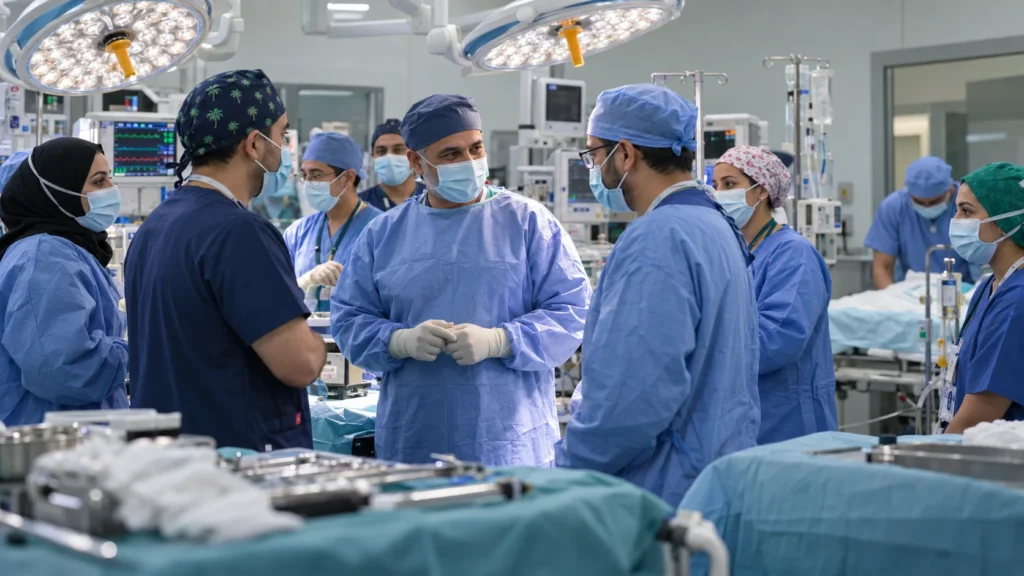
Fijian conjoined twins separated in Riyadh successfully underwent a complex 12-hour-and-45-minute operation involving 34 medical professionals, marking another milestone for Saudi Arabia’s internationally recognized conjoined twins program.
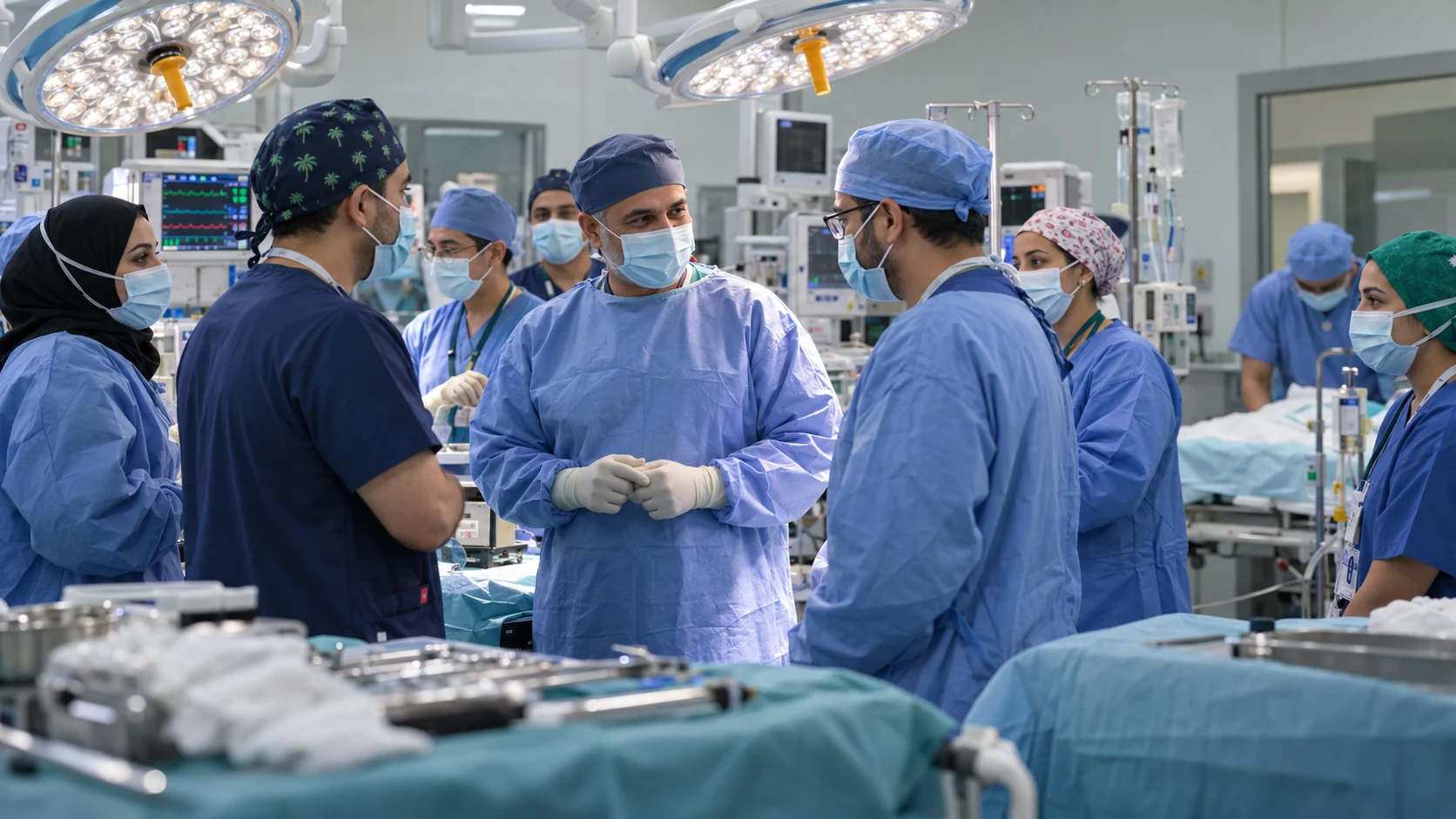
The surgery to separate Jesepeli and Diceacea was carried out at King Abdullah Specialized Children’s Hospital, part of King Abdulaziz Medical City under the Ministry of National Guard Health Affairs in Riyadh, according to the Saudi Press Agency.
The operation was completed in nine stages and became the 74th successful separation procedure performed under the Saudi Conjoined Twins Program over more than 35 years.
Fijian Conjoined Twins Separated in Riyadh After Complex Surgery
The Fijian conjoined twins separated in Riyadh had been joined at the abdomen and pelvis and shared several major organs and anatomical structures.
Dr. Abdullah Al-Rabeeah, adviser at the Royal Court, supervisor general of the King Salman Humanitarian Aid and Relief Center and head of the medical team, said the twins shared the liver, intestines, colon, anus, urinary system, reproductive system and pelvic bone.
That made the procedure particularly complex and required specialists from several different medical disciplines to work in carefully coordinated stages.
The twins had arrived in Saudi Arabia in July, after which detailed medical examinations were carried out to determine whether separation surgery was possible. Before the operation, doctors estimated that the procedure could take around 15 hours and assessed the likelihood of success at about 70 percent.
1. Surgery Lasted 12 Hours and 45 Minutes
The separation ultimately took 12 hours and 45 minutes, shorter than the approximately 15 hours originally expected.
Al-Rabeeah said the operation progressed through nine distinct stages, allowing the surgical team to separate shared organs and reconstruct the twins’ bodies progressively.
The scale of the procedure reflects the challenges involved when conjoined twins share multiple organ systems rather than being connected by relatively superficial tissue.
The successful outcome means the Fijian conjoined twins separated in Riyadh can now begin the next phase of recovery under close medical supervision.
2. 34 Medical Professionals Took Part
A multidisciplinary team of 34 consultants, specialists, technicians and nurses participated in the operation.
The medical team included experts in anesthesiology, pediatric surgery, plastic surgery, orthopedic surgery, urology and other supporting specialties.
Such procedures require extensive coordination because separating shared anatomy can affect several organ systems simultaneously.
Surgeons must also plan reconstruction carefully to ensure that both children retain adequate tissue and organ function after separation.
The nine-stage approach allowed specialists to address each anatomical challenge systematically while monitoring both children throughout the operation.
3. First Separation Involving Twins From Fiji
The procedure was also a first for the Saudi Conjoined Twins Program.
Officials said this was the first time the program had carried out a separation involving patients from Fiji.
That makes the case significant not only medically but also geographically, as the program continues to receive patients from across multiple continents.
The operation was carried out under directives from King Salman and Crown Prince Mohammed bin Salman, according to Saudi authorities.
The twins’ family later expressed gratitude for the medical care provided and thanked the Saudi medical team for the successful procedure.
4. Saudi Program Reaches 74 Separation Operations
The Fijian conjoined twins separated in Riyadh operation became the 74th separation performed under the Saudi Conjoined Twins Program.
According to SPA, the program has operated for more than 35 years and has evaluated 159 cases from 28 countries across five continents.
That track record has made the program one of Saudi Arabia’s most visible specialized medical and humanitarian initiatives.
Cases have varied considerably in complexity, with some twins sharing major organs, bone structures or circulatory systems.
Each potential procedure therefore requires detailed imaging, multidisciplinary assessment and individualized surgical planning.
5. Riyadh Hospital Plays Central Role
King Abdullah Specialized Children’s Hospital has become a central facility for many of the program’s most complicated cases.
The hospital operates within King Abdulaziz Medical City and provides highly specialized pediatric services, including complex surgery requiring large multidisciplinary teams.
The Fijian conjoined twins separated in Riyadh case adds another high-profile procedure to that record.
The wider Saudi medical system has increasingly emphasized specialized care, advanced surgery and healthcare capacity as part of broader development plans.
The Arabian Buzz has also reported on KSrelief Sudan healthcare support, another example of Saudi-backed medical and humanitarian activity beyond the Kingdom.
Recovery Now Becomes the Priority
Successful separation is only one stage of treatment for conjoined twins.
Postoperative care can involve intensive monitoring, wound management, organ-function assessment, reconstructive treatment and longer-term rehabilitation.
Officials have not yet provided a detailed public timeline for the twins’ recovery.
The focus will now be on monitoring Jesepeli and Diceacea individually following the extensive surgery and ensuring that both children recover safely from the procedure.
A Major Medical Milestone for the Saudi Program
The Fijian conjoined twins separated in Riyadh case highlights the scale of expertise required for highly complex pediatric surgery.
A procedure involving shared digestive, urinary, reproductive and skeletal structures required coordination across numerous specialties and nearly 13 hours in the operating room.
For the Saudi Conjoined Twins Program, the operation represents its 74th separation and its first involving children from Fiji.
For the twins and their family, however, the milestone is far more personal: the successful surgery marks the beginning of two separate paths of recovery after more than a year of living conjoined.
KSrelief Sudan healthcare support
Source: Saudi Press Agency — official surgery report
Fijian twins successfully separated in Riyadh
Arab News — source report
Fijian conjoined twins separated after nearly 13-hour operation