



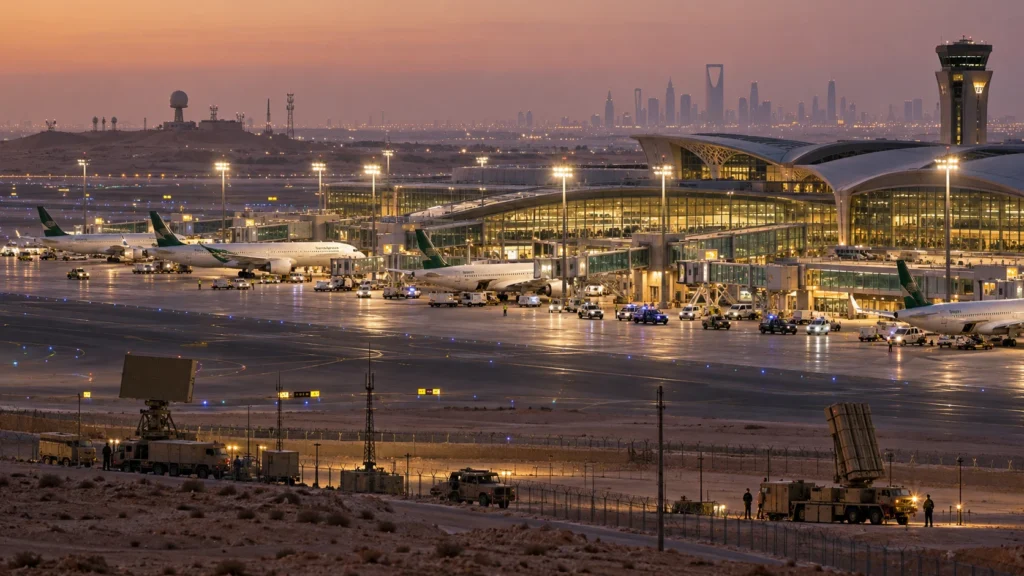
Saudi response to Houthi airport attacks is increasingly combining defensive measures, strikes against military infrastructure in Yemen, support for Yemeni government forces and calls for greater international accountability following a deadly attack on King Khalid International Airport in Riyadh.
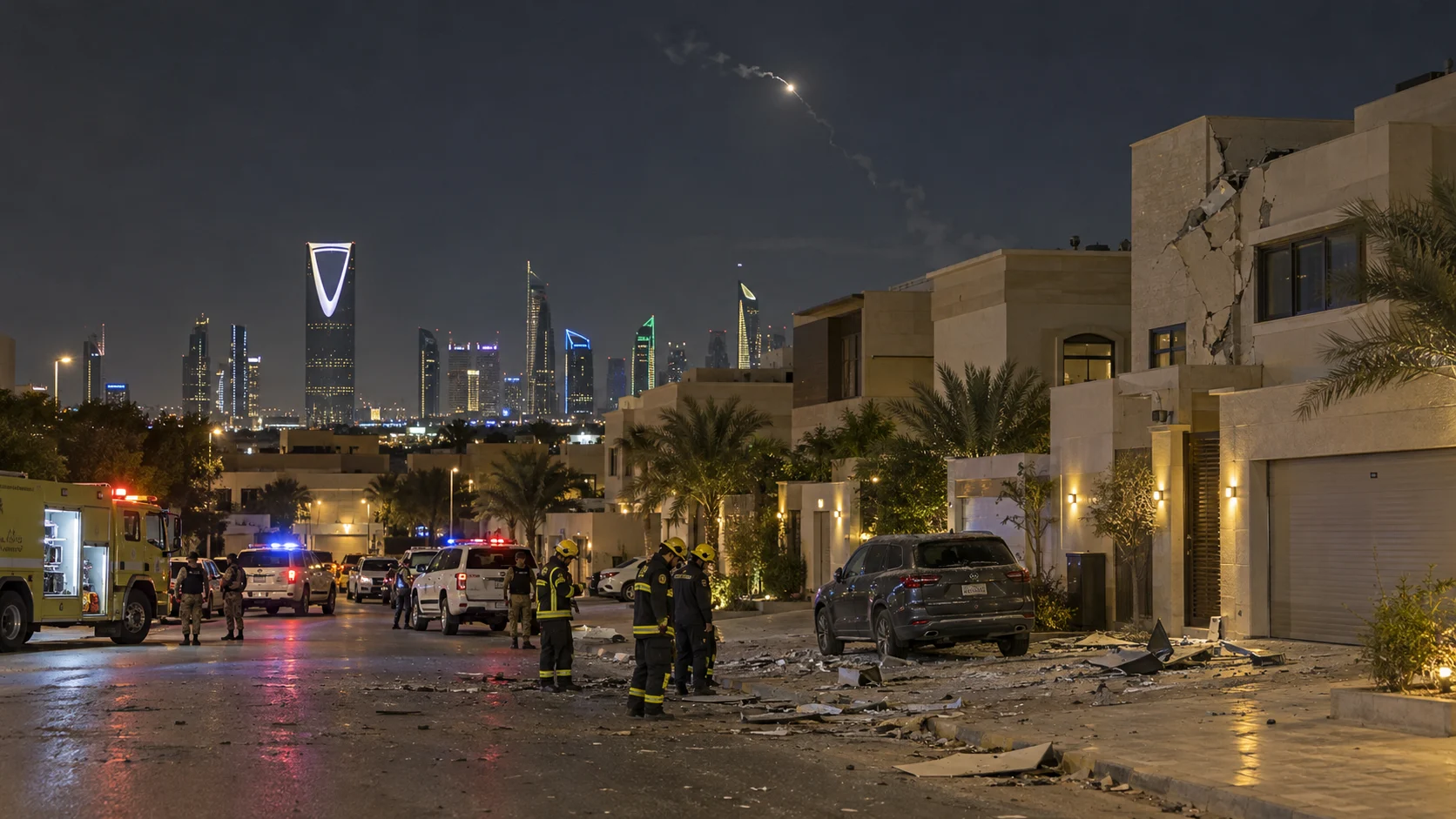
Saudi authorities said 12 people were killed and 309 injured in the October 10 attack on a passenger terminal at the Riyadh airport. Those killed included four Saudi citizens and eight residents of several nationalities. Saudi Arabia’s General Authority of Civil Aviation said the injured were receiving treatment at hospitals across Riyadh.
Coalition spokesman Maj. Gen. Turki Al-Maliki attributed the attack to the Houthis and described the targeting of the civilian passenger terminal as a war crime under international humanitarian law. He said coalition forces would respond firmly and within the framework of international humanitarian law.
The attack has intensified discussion about how Saudi Arabia is attempting to reduce the threat from missiles and drones while protecting airports, energy facilities and other civilian infrastructure.
Saudi Response to Houthi Airport Attacks Combines Defense and Pressure
The Saudi response to Houthi airport attacks involves more than a single retaliatory operation.
Recent coalition statements and independent analysis indicate that Riyadh is pursuing a layered approach involving air and missile defenses, strikes against launch infrastructure, intelligence-led targeting and support for forces fighting the Houthis inside Yemen.
An opinion analysis published by Arab News columnist Hassan Al-Mustafa argued that Saudi strategy is designed to make Houthi launches more difficult, reduce their accuracy and force the group to consume military stockpiles faster than they can be replaced.
That assessment represents the columnist’s analysis rather than an official Saudi operational doctrine, but several of the underlying developments are supported by publicly available reporting.
1. Protecting Airports With Layered Air Defense
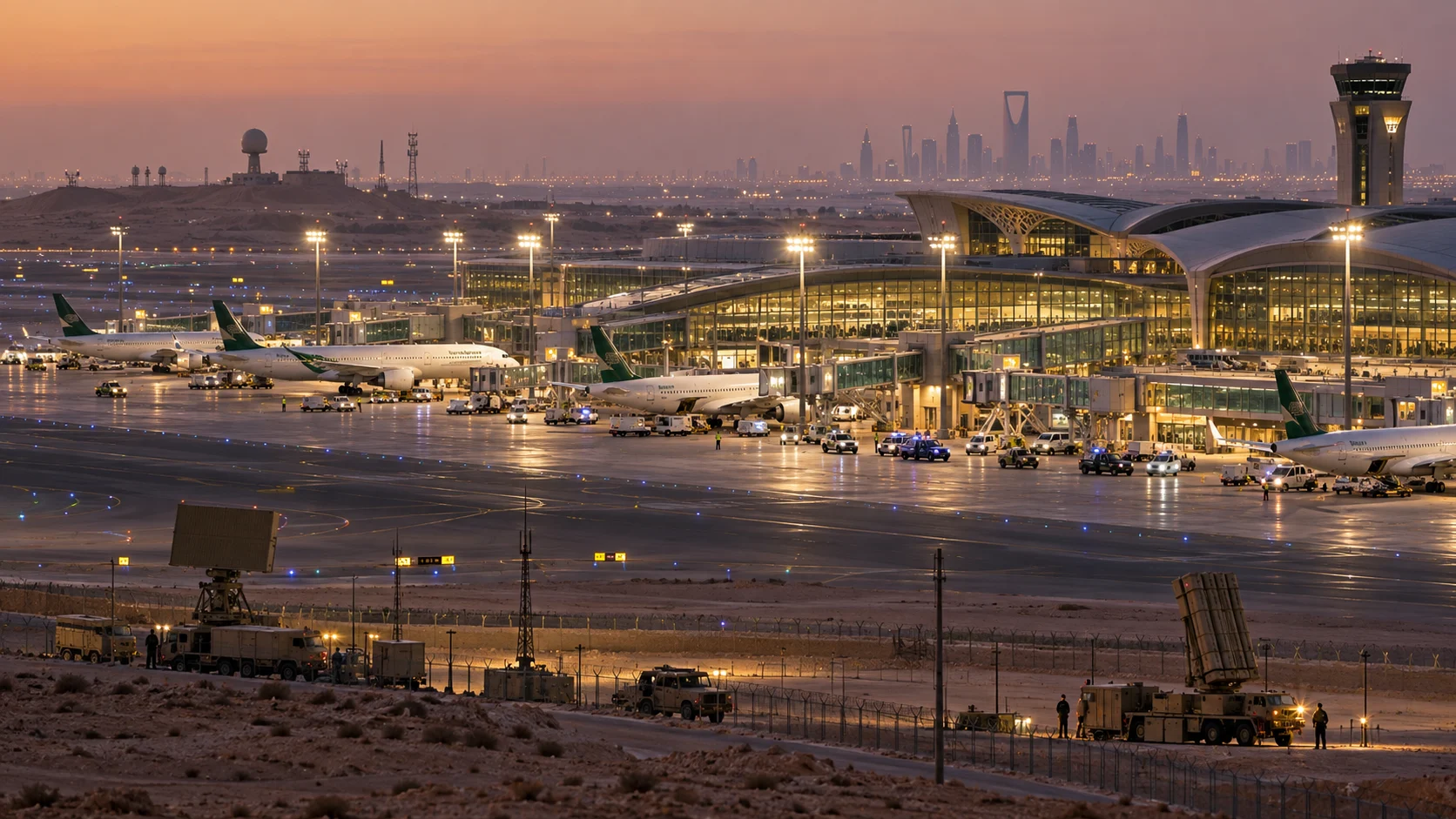
A central element of the Saudi response to Houthi airport attacks is the protection of civilian infrastructure against missiles and drones.
Saudi Arabia has invested heavily in air and missile defense systems capable of detecting and intercepting threats at different ranges.
The broader defensive architecture includes radar and early-warning systems as well as missile interception and counter-drone capabilities.
The challenge is particularly complex because incoming threats can include ballistic missiles, cruise missiles and relatively small unmanned aerial vehicles using different flight profiles.
Recent attacks on Saudi airports have reinforced the importance of maintaining protection not only around military installations but also around major civilian aviation hubs.
2. Coalition Targets Houthi Launch Infrastructure
Saudi-backed coalition forces have also stepped up operations against Houthi missile and rocket infrastructure.
The coalition recently announced that it had destroyed three Houthi rocket launch platforms that it said were being used to threaten regional security.
Other announced operations have targeted weapons-storage facilities, command-and-control centers and missile-related infrastructure.
The strategic logic is to disrupt attacks before weapons can be launched rather than relying solely on interception after missiles or drones are airborne.
The Saudi response to Houthi airport attacks therefore includes both defensive interception and offensive operations against military capabilities identified by the coalition.
3. Underground Facilities Complicate Military Operations
One of the most significant challenges is the expansion of Houthi underground military infrastructure.
Research by the International Institute for Strategic Studies using satellite imagery found that the Houthis expanded underground facilities after the April 2022 truce.
IISS identified construction near Saada featuring tunnel entrances large enough for heavy vehicles and also documented work at the former Yemeni Army Scud missile base at Jabal Attan in Sanaa.
Such underground facilities can complicate efforts to locate and destroy equipment, missiles and logistical infrastructure.
They can also make sustained intelligence collection important because facilities hidden inside mountains or tunnel networks are more difficult to assess than conventional above-ground military sites.
4. Yemeni Government Forces Remain Part of Strategy
The Saudi response to Houthi airport attacks also has a ground dimension inside Yemen.
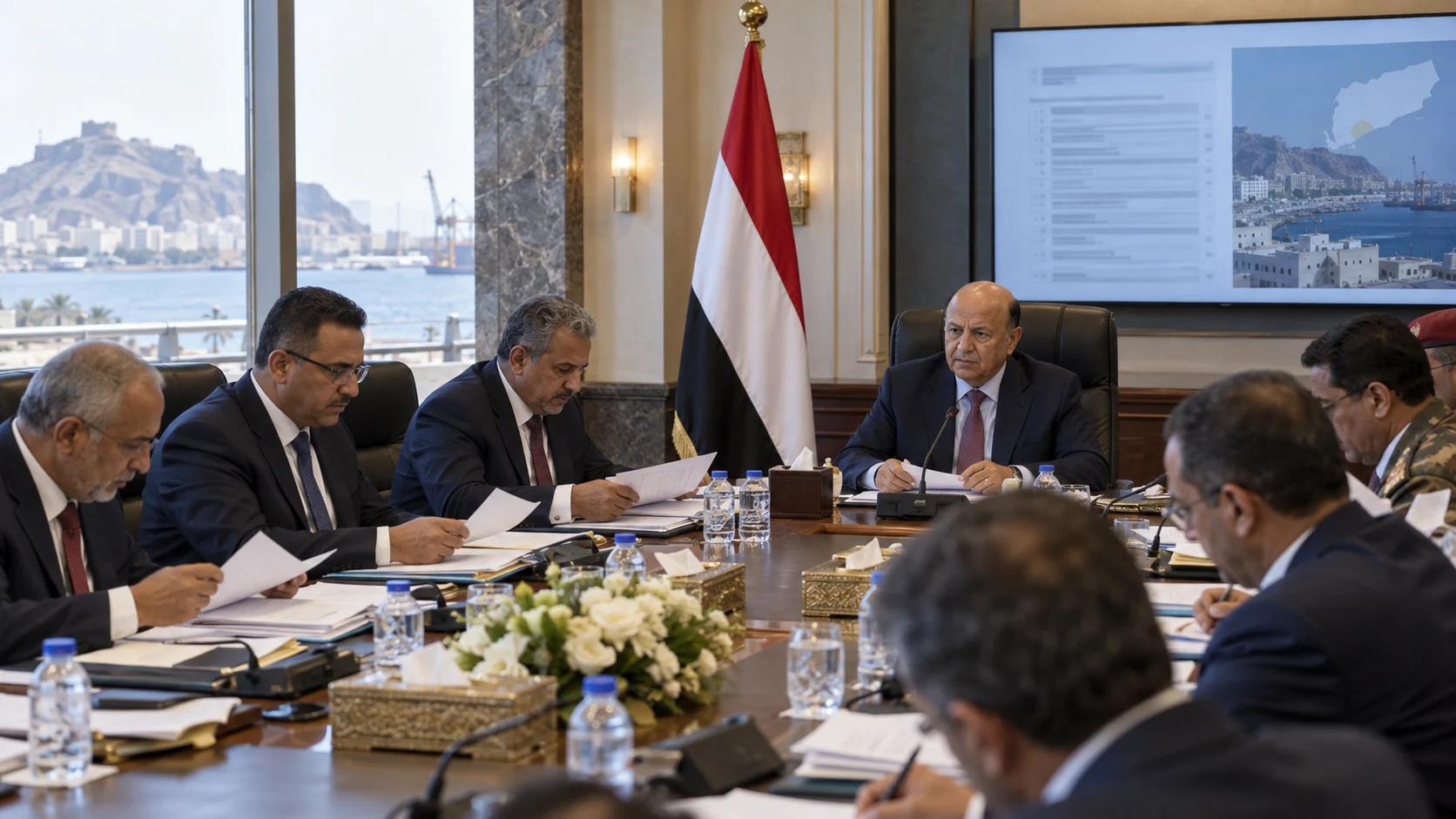
Saudi Arabia and the coalition continue to support Yemen’s internationally recognized government and aligned forces confronting the Houthis across several fronts.
The source opinion piece argues that areas including Yemen’s western coast, Taiz, Marib and the approaches to Bab Al-Mandab remain strategically important because of their connection to both domestic security and maritime navigation.
Bab Al-Mandab is particularly significant because it links the Red Sea with the Gulf of Aden and is a crucial passage for international shipping.
Control and security around the waterway therefore have implications beyond Yemen itself.
5. International Legal and Diplomatic Pressure
The legal characterization of attacks on civilian airports has also become an important part of the Saudi response to Houthi airport attacks.
Al-Maliki described the Riyadh terminal strike as a war crime, a characterization made by the coalition and not an independent judicial finding.
Documenting the type of weapon involved, damage to civilian facilities and casualties could support Saudi efforts to seek stronger international condemnation or accountability mechanisms.
Governments and international representatives have already issued condemnations following the Riyadh airport attack.
The European Union ambassador to Saudi Arabia said there was no justification for attacks against civilians or civilian infrastructure, while numerous governments expressed solidarity with the Kingdom.
Riyadh Airport Attack Killed 12 and Injured 309
The scale of casualties has increased international attention on the latest escalation.
Saudi Arabia’s civil aviation authority reported that 12 people died and 309 were injured in the King Khalid International Airport attack.
The fatalities included four Saudi citizens as well as residents from Bangladesh, Syria, Egypt, Palestine, Jordan, the United States and Sudan.
The incident occurred at a civilian passenger terminal, which helped drive widespread diplomatic condemnation.
Saudi authorities also reported other incidents affecting aviation infrastructure, including projectiles near King Fahd International Airport in Dammam.
Red Sea Security Adds a Wider Dimension
The Saudi response to Houthi airport attacks also intersects with concerns about maritime security.
Houthi military activity around the Red Sea and Bab Al-Mandab has made the Yemen conflict increasingly relevant to global shipping.
Commercial vessels using the route connect Asian and Gulf markets with Europe through the Suez Canal.
Repeated security incidents can increase insurance costs, alter shipping routes and disrupt international trade.
That means Saudi security policy is increasingly connected not only to defending its own territory but also to stability across Red Sea transport corridors.
What Happens Next Remains Uncertain
Al-Mustafa’s Arab News column predicts that Saudi Arabia is likely to intensify strikes against Houthi military targets, expand support to Yemeni government forces and seek greater international action against the group.
Those are analytical expectations rather than confirmed future Saudi policy.
What is already evident, however, is that the Saudi response to Houthi airport attacks is operating on several levels simultaneously: air and missile defense, targeting of military launch infrastructure, cooperation with Yemeni forces, intelligence operations and international diplomacy.
The deadly Riyadh airport attack has increased pressure on Saudi authorities and their partners to prevent further attacks on civilian aviation infrastructure.
As the confrontation continues, the effectiveness of those measures will depend on Saudi Arabia’s ability to detect launch preparations, protect high-value civilian sites and disrupt Houthi military capabilities while limiting risks to civilians in Yemen.
The escalation follows a series of Houthi attacks on Saudi Arabia that have prompted condemnation from governments across the region.
Source: Arab News — original opinion analysis:
Saudi Arabia’s response to Houthi targeting of civilian airports
IISS — Houthi underground facilities analysis:
Yemen’s Houthis are going underground