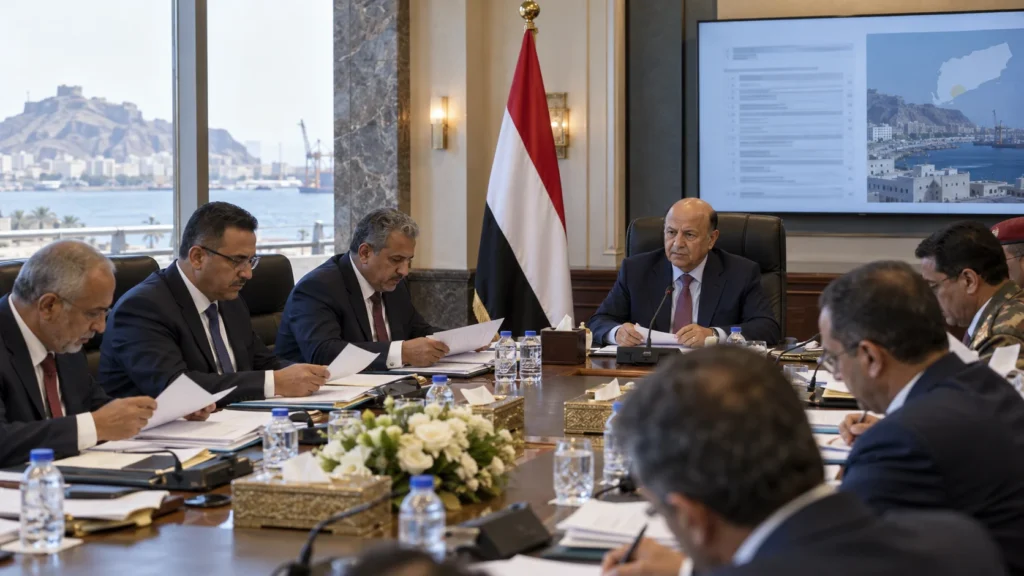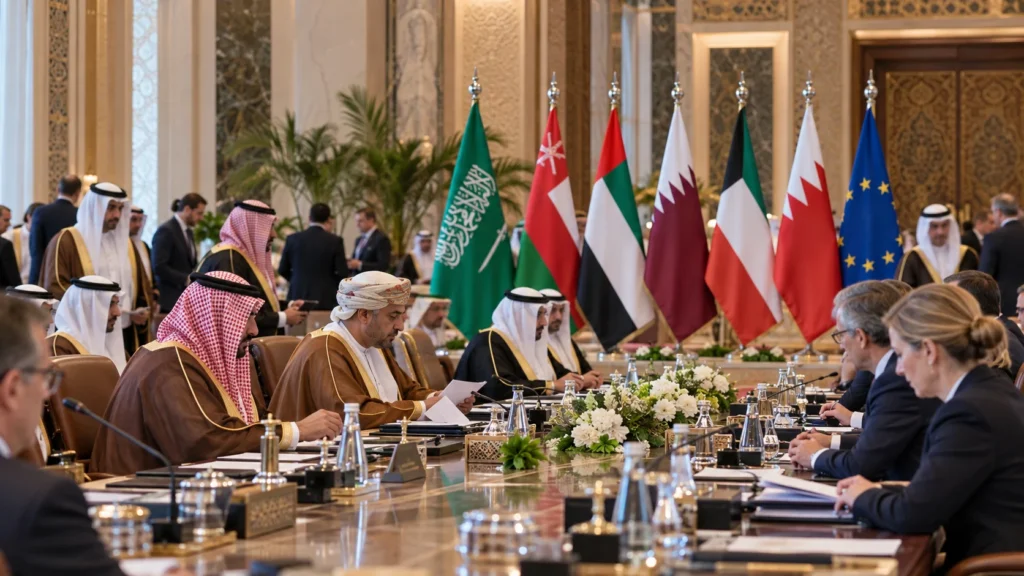






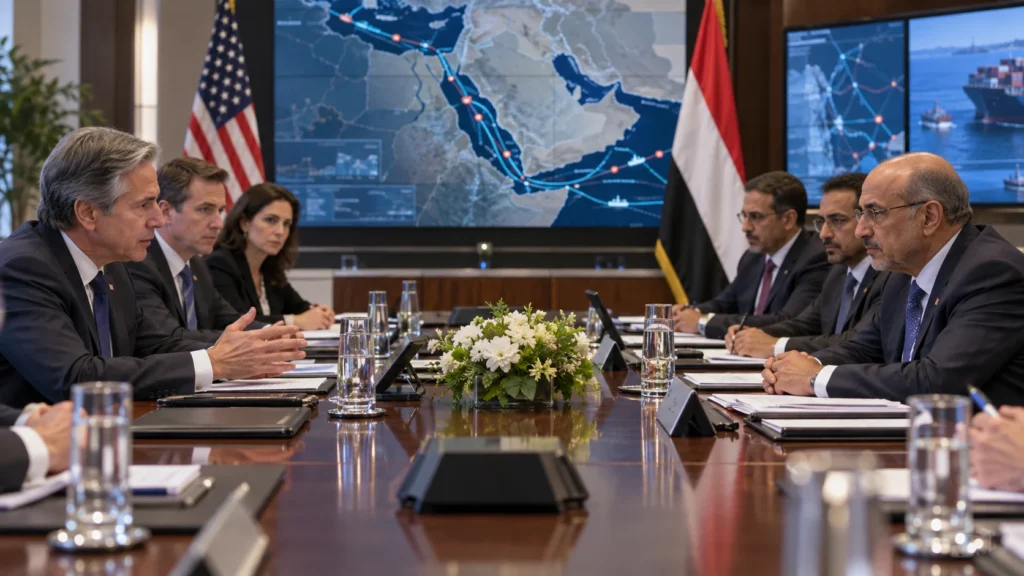
US sanctions on Houthis were among the key issues discussed during talks between US Chargé d’Affaires to Yemen Neil Hope and Yemeni Foreign Minister Afrah Al-Zouba, as Washington and Yemen examined ways to increase international pressure on the group.
According to the US Embassy to Yemen, the discussions focused on expanding international support for sanctions, increasing accountability for Houthi leaders accused of recruiting child soldiers, and strengthening democratic institutions to improve services for Yemenis.
The talks come as the United States continues to treat the Houthis, formally known as Ansarallah, as a Foreign Terrorist Organization and places a growing emphasis on Red Sea security, freedom of navigation and counterterrorism. The US State Department’s latest Yemen travel advisory also states that the Houthis continue to launch missile and drone attacks against shipping, Saudi infrastructure and Yemeni government forces.
US Sanctions on Houthis Focus on International Pressure
The latest discussion suggests Washington is seeking broader international backing for US sanctions on Houthis rather than relying solely on unilateral American measures.
The US Embassy said Hope and Al-Zouba discussed ways to strengthen pressure on the group and widen support for sanctions targeting Houthi leaders and networks.
Sanctions are typically designed to restrict access to financial systems, freeze assets where applicable and limit the ability of designated individuals or entities to operate internationally.
The United States has used sanctions repeatedly in relation to Houthi leaders, financial networks and entities linked to attacks or alleged human rights abuses.
1. Wider International Support for Sanctions
One of the main issues discussed was expanding international support for US sanctions on Houthis.
The goal, according to the embassy statement, is to increase pressure on the group through broader cooperation rather than relying only on US measures.
Internationally coordinated sanctions can be more effective when multiple governments restrict financial transactions, travel, commercial relationships and access to overseas assets.
Washington has previously argued that sanctions should target Houthi military and financial networks while minimizing harm to ordinary Yemenis and humanitarian operations.
Earlier State Department policy statements emphasized the need for humanitarian exemptions so food, medicine and other essential supplies could continue reaching Yemen even while pressure was placed on sanctioned individuals and entities.
2. Child Soldier Recruitment Raises Accountability Concerns
The discussions also focused on holding Houthi leaders accountable over allegations involving the recruitment of child soldiers.
The issue has long been part of international concern surrounding Yemen’s conflict.
US government reporting has previously identified child soldier recruitment as a serious problem in Yemen, while noting that prolonged conflict, poverty and social disruption contribute to the conditions in which children can be recruited by armed groups.
In the latest talks, Washington and Yemen specifically discussed accountability for Houthi leaders accused of recruiting children.
That adds a human rights dimension to the broader debate over US sanctions on Houthis, alongside concerns about military operations, shipping attacks and regional security.
3. Red Sea Security Remains a Major US Priority
The talks also come against the backdrop of continued security concerns in the Red Sea and Bab Al-Mandab.
According to the US Embassy, Neil Hope is leading the embassy team in implementing Washington’s regional national-security priorities, including protecting freedom of navigation and preventing the region from becoming a safe haven for terrorist groups.
The Red Sea is one of the world’s most important maritime corridors, linking the Indian Ocean and Mediterranean through the Suez Canal.
Attacks on commercial vessels can affect shipping costs, insurance premiums, delivery times and global supply chains.
The latest State Department Yemen advisory says Houthi forces have targeted shipping in the Red Sea and Bab Al-Mandab as well as infrastructure in Saudi Arabia.
Houthis Remain Designated as a Foreign Terrorist Organization
The United States redesignated Ansarallah, commonly known as the Houthis, as a Foreign Terrorist Organization in March 2025, according to the US State Department.
That designation forms an important part of the current US sanctions on Houthis framework.
A Foreign Terrorist Organization designation can trigger restrictions on financial and material support while exposing individuals and organizations dealing with the listed group to legal consequences under US law.
Washington has argued that its pressure campaign is aimed at changing Houthi behavior and reducing attacks rather than worsening Yemen’s humanitarian situation.
US-Yemen Diplomatic Engagement Continues
Although the US Embassy in Sana’a suspended operations in 2015, Washington has continued its diplomatic engagement with the internationally recognized Yemeni government through the Yemen Affairs Unit based in Riyadh.
Neil Hope currently serves as US Chargé d’Affaires to Yemen and has remained involved in discussions covering security, governance and international coordination.
The latest talks with Foreign Minister Afrah Al-Zouba demonstrate that sanctions are only one element of a broader agenda.
The embassy said the two sides also discussed strengthening democratic institutions and improving government services for Yemenis.
Governance Also Part of the Discussion
The talks were not limited to sanctions and military pressure.
According to the embassy statement, Washington and Yemen also discussed empowering democratic institutions to improve services for the Yemeni population.
Institutional capacity remains a major challenge after years of conflict, economic disruption and political fragmentation.
Efforts to strengthen governance could involve improving public administration, service delivery and financial management in areas controlled by Yemen’s internationally recognized government.
The United States has previously supported programs aimed at improving governance, fiscal management and essential services in Yemen.
Sanctions Form Part of a Broader Pressure Strategy
The latest US sanctions on Houthis discussion reflects a broader strategy combining financial restrictions, diplomatic pressure, counterterrorism measures and maritime-security efforts.
Washington has previously sanctioned Houthi-linked individuals and entities over alleged human rights abuses and activities considered threatening to regional security.
For example, previous US sanctions have targeted Houthi officials accused of involvement in abusive detention practices.
The challenge for policymakers is to increase pressure on the group while avoiding additional economic hardship for Yemen’s civilian population.
That balance is likely to remain central as Washington seeks broader international cooperation.
Red Sea and Regional Security Stay in Focus
The latest talks come at a time when Red Sea security remains closely connected to wider developments in Yemen and the Gulf.
Commercial shipping, regional infrastructure and international navigation routes have all become central issues in diplomatic and military discussions involving Yemen.
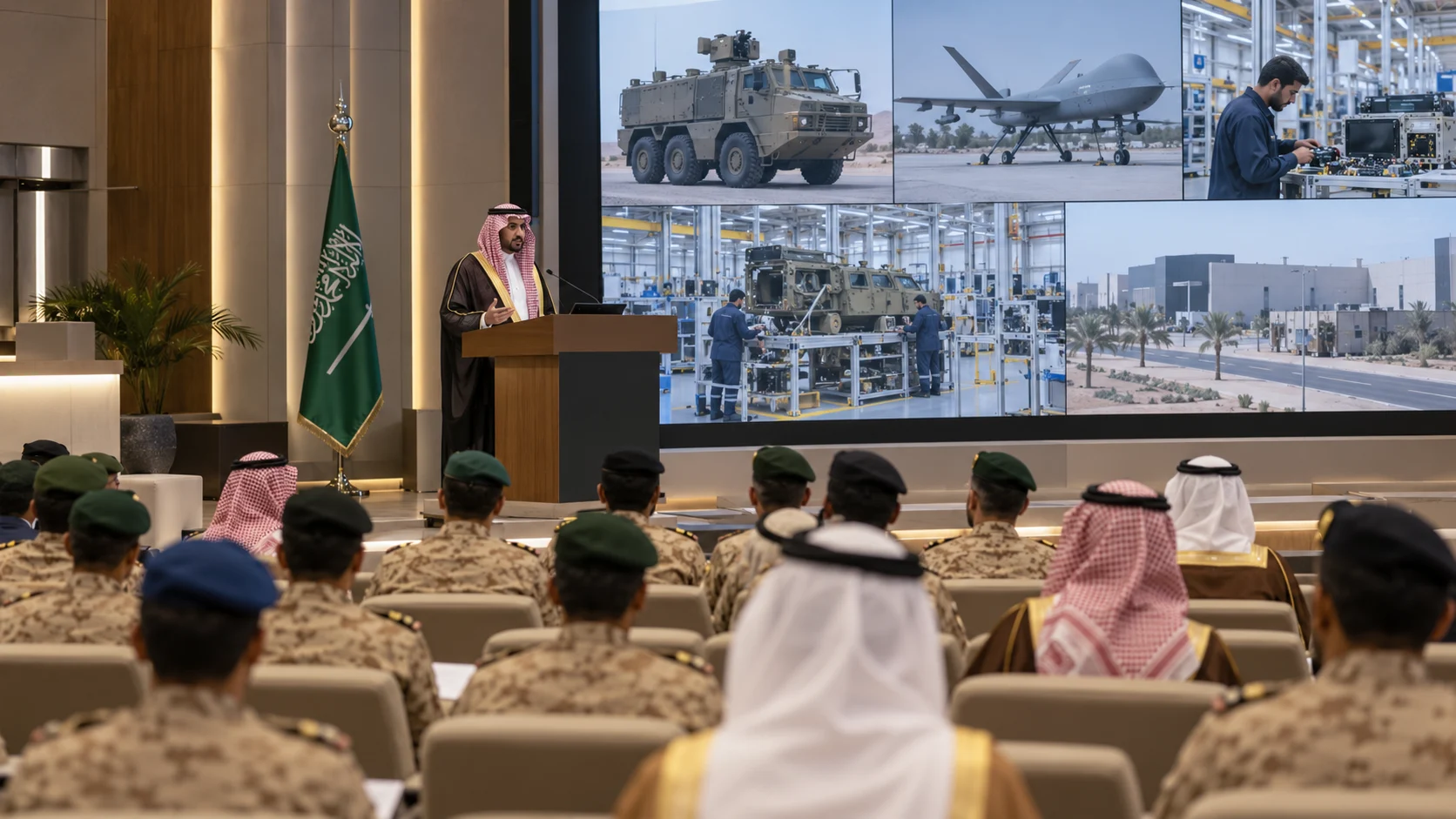
The Arabian Buzz has also covered the broader regional security environment, including Saudi Arabia’s investment in defense capacity and military partnerships through initiatives such as the World Defense Show 2026 strategic agreements.
For Washington and Yemen, the latest meeting suggests that financial pressure, accountability and institutional support will remain connected parts of the policy response.
As discussions over US sanctions on Houthis continue, attention will focus on whether additional governments join the sanctions effort and whether new measures are announced against Houthi leaders, financial networks or associated entities.
Source: Arab News — original report
US, Yemen discuss sanctions on Houthis
US State Department — current Yemen advisory and Houthi designation context
US State Department Yemen advisory