






Saudi Arabia Unveils $2bn Renewable Energy Investment to Power Turkey’s Solar Expansion
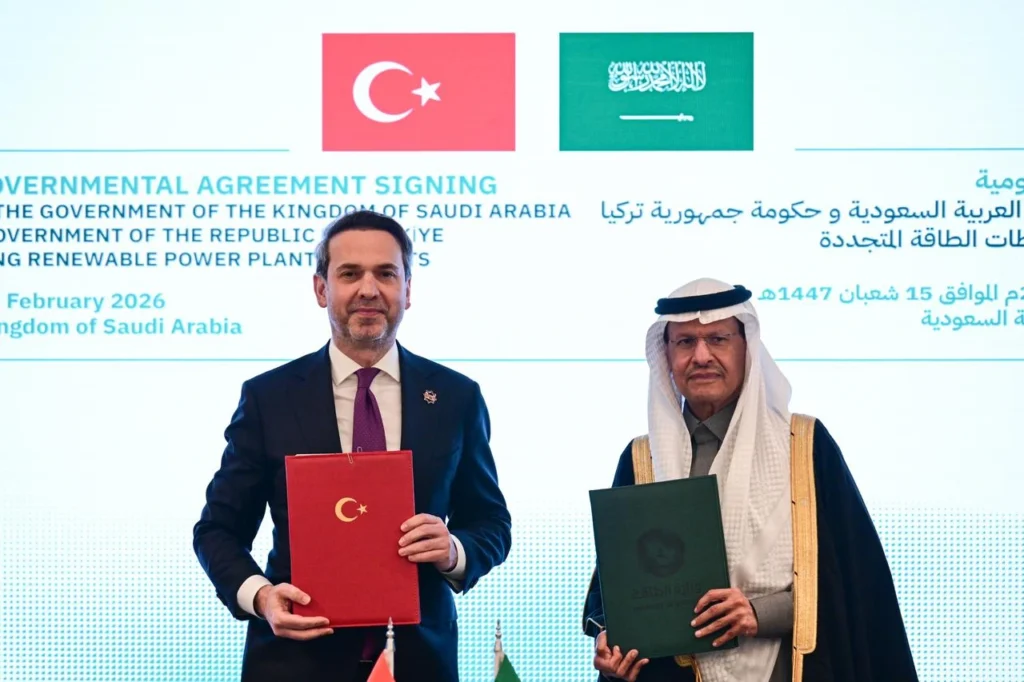
Saudi Arabia has announced plans to invest around $2 billion in large-scale solar power projects in Turkey, marking the first phase of a broader bilateral agreement aimed at expanding renewable energy production between the two countries.
Under an intergovernmental agreement signed in Riyadh on Tuesday, Saudi companies will initially develop solar power plants with a combined capacity of 2,000 megawatts in Turkey’s Sivas and Karaman provinces. This will be followed by an additional 3,000MW of wind and solar capacity, to be finalized at a later stage, according to officials familiar with the deal.
The agreement reflects deepening energy cooperation between Riyadh and Ankara, as both countries accelerate investments in clean energy and diversify their power generation mix. It also aligns with Saudi Arabia’s broader push to expand its global renewable energy footprint under its economic diversification agenda.
Turkey’s Energy Minister Alparslan Bayraktar said the deal includes a 50 percent localization requirement, which is expected to significantly benefit Turkey’s electrical equipment manufacturing and services sectors.
“This localization rate will make a meaningful contribution to the development of domestic industries,” Bayraktar said in a post on X, adding that the projects will rely on external financing, including funding from international financial institutions.
According to a Bloomberg report published in June, Saudi utility ACWA Power is set to build the solar plants, further strengthening its presence in international renewable markets.
Under the terms of the agreement, Turkey will purchase electricity generated from the projects for a period of 25 years. Power from the Sivas solar plant will be bought at 2.3415 euro cents per kilowatt-hour, while electricity from the Karaman project will be purchased at 1.995 euro cents per kilowatt-hour — a record-low price for renewable energy in Turkey, Bayraktar said.
The investment underscores Saudi Arabia’s growing role as a global player in renewable energy development and highlights Turkey’s ambition to attract large-scale foreign investment to meet its clean energy targets while reducing reliance on fossil fuels.